
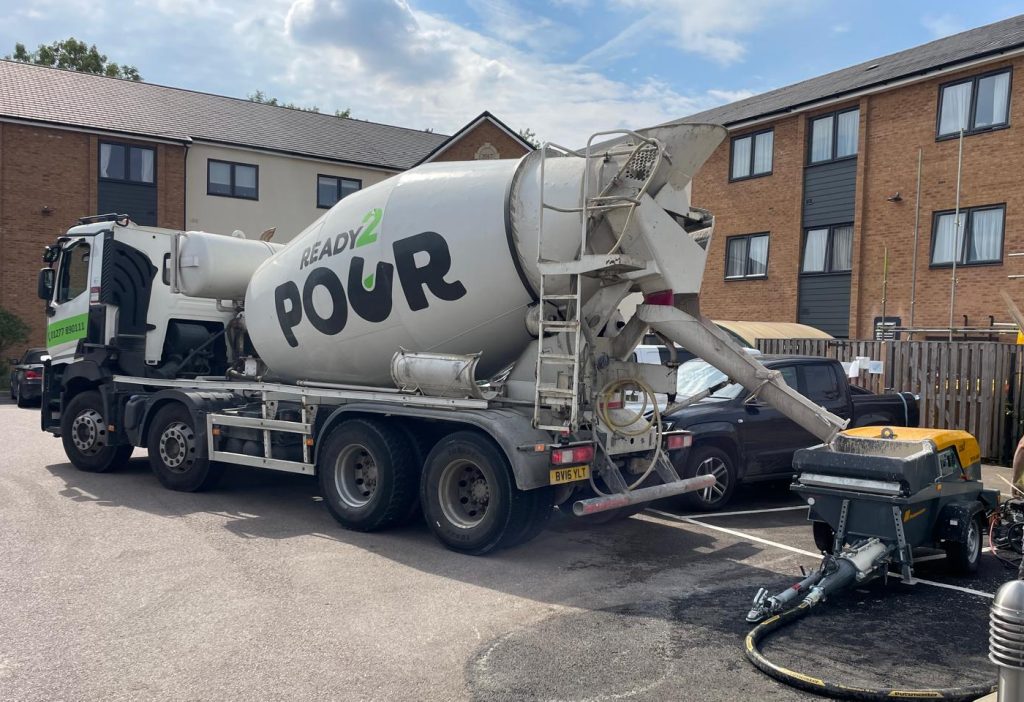
Liquid screed provides a fast and effective way to create a smooth and level surface across residential and commercial projects. Its flowing consistency makes it particularly suitable for large floor areas and underfloor heating systems, where the screed can flow around the pipework and create consistent coverage.
However, like any flooring system, liquid screed problems can occur if the preparation, installation or drying process is not managed correctly. Cracking, an uneven surface, slow drying and problems with the final floor finish are often preventable with the right planning and the correct approach at each stage of the project.
Understanding some of these screed problems and common mistakes can help contractors, developers and homeowners avoid unnecessary remedial work and potential construction project delays.
Poor Subfloor Preparation
Many liquid screed problems occur before the screed mix even arrives on site. Whether the project involves screed supply only or a complete installation service, the first step towards a successful result is making sure the subfloor is suitably prepared.
The substrate should be stable and clean, with dust, debris and loose material removed. Insulation needs to sit flat without movement, while membranes should provide an effective barrier and be properly sealed. Perimeter insulation and any required joints also need to be correctly positioned.
When underfloor heating is being installed, the pipework should be securely fixed and pressure-tested before the screed is poured. Poorly secured pipes can potentially move or float during installation, affecting screed depth and the performance of the finished floor.
Taking time over preparation reduces the risk of problems later and helps the liquid screed create the level surface required for subsequent floor coverings.
Cracking in Liquid Screed
Cracking is understandably one of the biggest concerns surrounding liquid floor screed. Although flowing screeds such as Gyvlon are designed to provide excellent dimensional stability, cracking can still occur when installation conditions are unsuitable.
Gyvlon screed cracking may be associated with issues such as insufficient screed depth, movement within the floor build-up, inadequate edge detailing or incorrect drying and heating procedures. Problems can also develop around areas where movement is concentrated, such as doorways.
The best way to reduce the risk is to make sure the screed specification, depth and floor preparation are appropriate for the project and manufacturer’s instructions are followed throughout the installation and curing process.
Underfloor heating should also be commissioned correctly rather than simply being switched to a high temperature in an attempt to dry the floor quickly.
Slow Drying and Excess Moisture
Another common concern is a liquid screed taking longer than expected to become fully dry. Drying times vary according to the type and depth of screed, temperature, humidity and ventilation available within the building.
Inadequate ventilation can significantly affect the drying process. Once the screed has passed its initial curing period, suitable ventilation helps moisture escape from the building rather than remaining trapped inside.
It is also important to distinguish between a floor being suitable for foot traffic and being sufficiently dry for the final floor finish.
Moisture content should therefore be checked before laying tiles, timber, vinyl or other floor coverings. Installing a floor covering too early can trap moisture and potentially lead to adhesive failure, damage or additional project delays.
Surface Laitance
With calcium sulphate screeds, including standard Gyvlon products, surface laitance can form during the curing process. This is a weak layer of fine particles that develops across the floor surface.
If this layer is dealt with incorrectly, adhesives and primers may bond to the weak material rather than the strong screed beneath it. This can lead to problems with the final floor covering.
Standard Gyvlon screeds should therefore be sanded at the appropriate stage to remove loose and friable material and open the surface. The floor should then be thoroughly cleaned so it is free from dust before priming, adhesive or another flooring layer is applied.
The exact preparation required can vary between screed products, making it essential to follow the manufacturer’s instructions rather than treating every liquid screed in the same way.
Uneven Liquid Screed
Although it is sometimes described as a self-leveling screed, a liquid screed still needs to be installed correctly to achieve a consistently flat floor surface.
An uneven subfloor, incorrect datum levels, movement in insulation or poor installation can all contribute to high and low areas. This can create problems for other trades and make laying the final floor more difficult.
Correct preparation and accurate levels are therefore essential. During liquid screed installation, the material also needs to be properly placed and dappled to help produce the required smooth and level surface.
Trying to correct poor preparation with additional screed during the pour can create further issues, including inconsistent depths and extended drying times.
Problems With Underfloor Heating
Flow screed works particularly well with underfloor heating because the liquid material can closely surround the pipes, helping to create efficient heat transfer across the floor.
Problems can occur, however, when the heating system is not properly considered as part of the screed installation.
Pipes should be firmly secured before pouring, while the correct screed depth needs to be maintained throughout the floor. Once installed, the system should only be commissioned in accordance with the relevant guidance. Increasing the heating temperature too quickly can place unnecessary stress on the floor.
Correct installation allows the screed and underfloor heating to work together rather than creating a potential point of failure.
Avoiding Common Liquid Screed Problems
Most common issues can be reduced through careful planning. Selecting a suitable screed, preparing the substrate correctly, controlling the curing and drying process, testing moisture content and preparing the surface before floor coverings are installed can make a significant difference.
Communication between the screed installer, main contractor and other trades involved in the job is equally important, particularly on larger commercial projects where the floor forms part of a wider construction programme.
At Ready2Pour, we supply and install BBA-approved Gyvlon liquid screeds for residential and commercial projects across Hertfordshire, Essex, Cambridgeshire, Greater London, Bedfordshire and Buckinghamshire.
From selecting the right screed for your floor build-up to installation over underfloor heating, our experienced team can provide expert advice to help you avoid common screed problems and achieve a high-quality final floor.
If you are planning your next project, contact Ready2Pour to discuss your requirements and find a suitable liquid screed solution.