
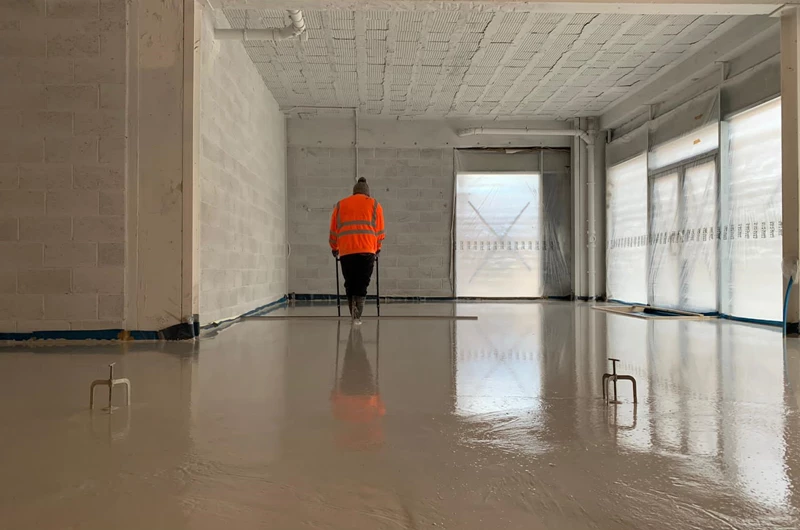
At Ready2Pour, we understand that accurately estimating the drying time for liquid screed is essential to maintaining project timelines and preventing costly delays. Whether you are a homeowner preparing for tile installation or a contractor managing a construction schedule, knowing how long screed takes to dry is critical to avoid defects and setbacks.
Key Takeaways
- Most liquid screed can be safely walked on after 24 to 48 hours; however, full drying suitable for floor coverings typically requires 30 to 60 days, depending on screed thickness and site conditions.
- Under ideal conditions, approximately 20-25 degrees Celsius and 65% relative humidity, liquid screed dries at about 1mm per day up to 40mm thickness, then slows to 0.5mm per day beyond that. Thicker screeds naturally require longer drying times.
- A standard 75mm thick liquid screed generally takes around 110 days to dry completely under normal conditions.
- Fast drying screeds, combined with controlled underfloor heating or dehumidification, can significantly reduce drying times, with some products ready for floor coverings in as little as 3 to 10 days.
- For tailored advice on liquid screed and drying times, we encourage you to contact Ready2Pour.
Understanding Floor Screed & The Drying Process
Floor screed is a cement or anhydrite-based layer applied over a concrete subfloor or insulation to provide a smooth, level base for floor finishes such as tiles, laminate, or carpet. The composition of the screed mix varies depending on the type of screed selected, but the objective remains consistent: to deliver a stable surface for flooring installation.
Traditional Screed vs. Liquid Screed
Traditional screed, commonly referred to as sand and cement screed, is made with coarser aggregates and sets through a chemical reaction between cement and water. It typically dries at approximately 1mm per day, making it a reliable choice for many construction sites. Liquid screed, also known as flowing screed, contains finer aggregates and is often used for rapid installation, especially over underfloor heating pipes.
The Chemical Reaction and Proper Drying
The drying process involves a chemical reaction where water binds with cementitious materials. Proper drying is crucial to avoid issues like cracking or mould growth, especially in wet rooms or areas with underfloor heating. Ambient humidity and temperature at the construction site significantly affect how quickly the screed will dry.
First 24-48 Hours: Curing & Early Traffic Phase
The first 24 to 48 hours following screed application are critical to ensure long-term durability and performance. During this period, the screed surface must be left undisturbed. Light foot traffic is typically permissible after 24 to 48 hours once the screed has sufficiently hardened, but the following precautions should be observed:
- No walking, loading, tool placement, or storage on the screed for at least 24 hours, preferably 48.
- Keep all doors and windows closed to prevent draughts that may cause rapid evaporation and surface cracking.
- Avoid operating underfloor heating systems, industrial heaters, or exposing the screed to direct sunlight.
- After approximately 48 hours under standard site conditions, careful walking in soft-soled shoes is acceptable; however, heavy traffic and point loads should be avoided.
If early access is unavoidable, we recommend protecting walkways with plywood or corex boards, especially near entry points and material drop zones. Controlling moisture loss during this curing phase is vital to prevent curling, cracking, and weak spots.
After 24-48 Hours: Natural Drying & Site Conditions
Following the initial cure, attention shifts to managing the drying process. Opening windows on opposite sides of the building to create cross-ventilation facilitates moisture evaporation from the screed surface. Proper ventilation is one of the most effective methods to promote consistent drying.
Liquid screed drying rates under natural conditions generally follow this guideline: approximately 1mm per day up to 40mm thickness, then slowing to 0.5mm per day beyond that. For example, a 50mm thick liquid screed will require about 60 days of natural drying to reach suitable moisture levels for sensitive floor finishes.
Several factors influence drying times, including:
- Temperature: Higher ambient temperatures accelerate drying; conversely, cold conditions significantly prolong drying durations.
- Humidity: Relative humidity levels between 50-65% are optimal; higher humidity slows drying.
- Ventilation: Adequate airflow reduces moisture accumulation around the screed.
- Thickness: Thicker screeds require more time to dry.
- Water Exposure: Avoid exposure to rain, leaks, or excessive washing, which can delay drying.
At Ready2Pour, we recognise that these combined factors have a substantial impact on drying times and advise careful monitoring throughout the process.
Screed Types & Typical Drying Times
Drying times vary according to screed type, thickness, and site conditions. Below is an overview:
Traditional Sand and Cement Screed: This mix of sand, cement, and water sets within 1-2 days and dries at approximately 1mm per day up to 40mm thickness, then slows thereafter. Drying times are comparable to liquid screed.
Flowing Liquid Screed: Including calcium sulphate and anhydrite screeds, these self-leveling mixes typically set in 6 to 48 hours and dry at about 1mm per day. Calcium sulphate screeds may take 40 to 80 days to fully dry, while cement-based liquid screeds dry within 14 to 21 days under ideal conditions.
Granolithic Screed: Designed for heavy-duty industrial flooring applications, granolithic screed sets within 12 to 28 hours and dries slightly faster than other types at around 2mm per day. It contains coarser aggregates and is ideal for environments requiring high durability.
Fast Drying Screed: Engineered with specialized binders and additives, fast drying screeds can set in as little as one hour and be ready for floor coverings within 3 to 10 days. These screeds dry rapidly due to their quick setting properties and finer aggregates.
We recommend consulting the manufacturer’s technical datasheets for precise drying times, especially when using proprietary products.
When Is Screed Ready for Floor Coverings?
While walking on screed after 48 hours is generally safe, the critical factor for flooring installation is moisture content. Each floor finish has specific moisture tolerance requirements.
For calcium sulphate screeds, moisture content should be reduced to 0.5% by mass before laying floor coverings. Typical guidelines include:
- Tiles: A 40mm liquid screed may require 30 to 40 days to reach 0.5% moisture.
- Laminate and Engineered Wood: These finishes often require similar or longer drying times; always verify with the flooring manufacturer.
- Carpet and Vinyl: These finishes demand the lowest moisture levels and humidity before installation.
At Ready2Pour, we strongly advise moisture testing using reliable methods such as in-situ relative humidity probes, hair hygrometers, or calcium carbide (CM) tests to confirm readiness before proceeding.
Accelerating Screed Drying Safely
We appreciate the need to expedite project timelines without compromising screed integrity. The following methods can safely accelerate drying:
- Temperature Control: Maintaining a warm environment speeds drying, but excessive heat should be avoided to prevent cracking.
- Humidity Management: Keeping relative humidity between 50-65% optimizes drying rates.
- Ventilation: Opening windows and doors after the initial curing phase facilitates moisture removal.
- Screed Thickness: Applying thinner screed layers where feasible reduces drying time.
- Water Exposure: Preventing water ingress is essential.
- Underfloor Heating Commissioning: After a minimum 7-day curing period, a controlled underfloor heating cycle can accelerate drying. Start with a gentle flow temperature (~25-26°C) for several days, then gradually increase to system design temperatures (typically 45-56°C), ensuring continuous air circulation.
- Dehumidification: Using appropriately sized dehumidifiers after 7 days can significantly reduce drying times. Windows and doors should remain closed during operation to maximize efficiency.
- Force Drying: Industrial heaters and fans can be used cautiously to supplement drying, provided heat is applied evenly and moisture loss is controlled.
Certain fast drying screed products with specialized additives may dry substantially faster, sometimes reaching tiling moisture levels within 1-2 days, drying at rates of 10 to 15mm per day. Always adhere to manufacturer instructions.
For expert guidance on drying options and realistic project timelines, please contact Ready2Pour today.
FAQs
How long before I can walk on liquid screed?
Typically, liquid screed can support light foot traffic after 24 to 48 hours once the surface has set sufficiently. Heavy loads should be avoided during this period.
Should I open windows immediately to aid drying?
No. During the first 24 to 48 hours, doors and windows should remain closed to retain moisture and prevent surface cracking. After this initial curing phase, opening windows enhances drying.
How long does screed with underfloor heating take to dry?
Natural drying rates of approximately 1mm per day apply. Controlled underfloor heating, initiated after at least 7 days, can reduce drying times. Total drying duration depends on screed thickness, temperature, and humidity.
How can I confirm the screed is dry enough for flooring?
Moisture testing using hair hygrometers, in-situ RH probes, or calcium carbide tests is essential. For calcium sulphate screeds, moisture content should be below 0.5% before installing tiles, vinyl, or laminate.
Can drying be accelerated safely?
Yes. Controlled methods such as underfloor heating commissioning, dehumidification, ventilation, and temperature management can expedite drying without compromising screed quality.
What are the risks of installing flooring too early?
Excess moisture trapped beneath floor coverings can cause adhesive failure, surface blistering, mould growth, and costly repairs. Proper moisture testing and adherence to drying times are vital.